Coffee Bar Design
Coffee Bar Design: The FLOWS Method for Setups That Actually Work
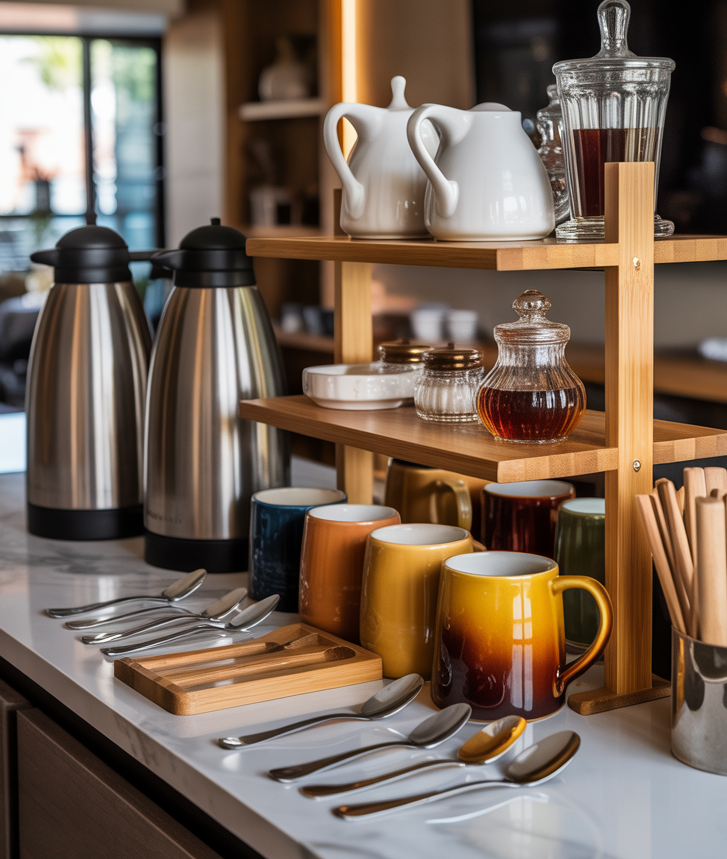
You’ve seen them on Pinterest. Gorgeous coffee bars with perfectly arranged mugs. Stunning bar carts dripping with vintage charm. Holiday hot chocolate stations that look magazine-worthy.
But here’s what those beautiful photos don’t show. Whether guests can actually serve themselves without awkwardly reaching over glassware. If the sugar runs out after three people. Whether anyone can find the stirrers.
A bar or station that doesn’t function isn’t entertaining. It’s decorative furniture that creates stress instead of hospitality.
That’s why we created the FLOWS Method. Every bar and station we feature on this site demonstrates these five essential principles. When a setup truly flows, entertaining becomes effortless.
Why Traditional Bar Styling Fails
Most bar and station advice focuses exclusively on aesthetics. Choose a color palette. Add greenery. Style with vintage finds.
These elements matter, but they’re not where success starts.
Think about the last time you visited a coffee shop. The condiment bar works because everything you need is within arm’s reach. Milk and cream sit at accessible heights. Sugar packets overflow from generous containers. Stirrers stand ready in a tall vessel you can grab without looking.
Nobody designed that station to look pretty first. They designed it to handle 200 customers per day without frustration. The functionality creates the visual appeal.
Your home bars and stations deserve the same intentional design. Whether you’re setting up a daily coffee station or a party beverage bar, the FLOWS Method ensures your setup actually works.
The FLOWS Method: Five Principles That Make Bars Work
FLOWS stands for Fully Stocked, Layered, Organized, Within Reach, and Styled. These five principles work together to create bars and stations that function beautifully.
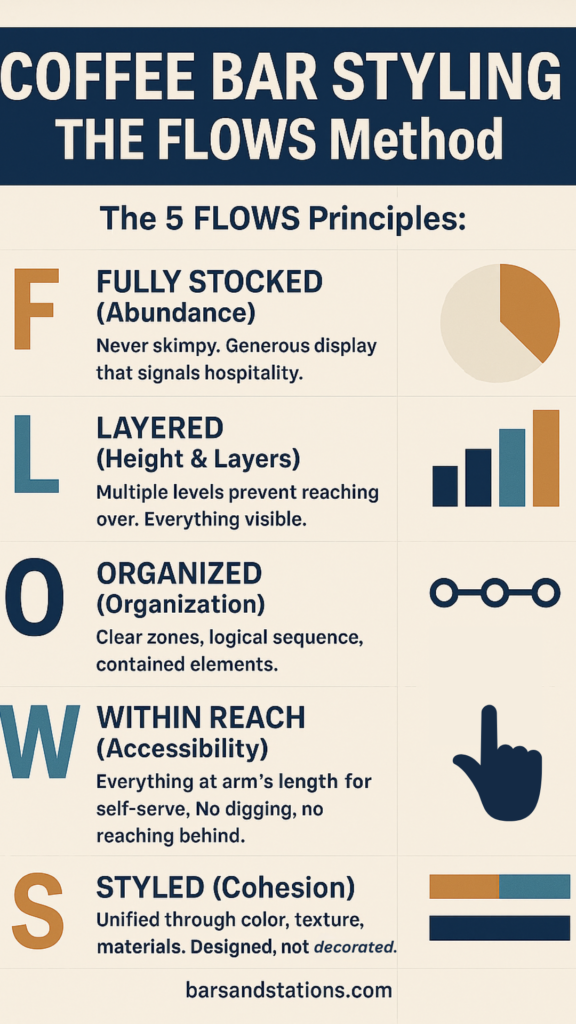
Let’s break down each element.
Fully Stocked: Abundance Signals Hospitality
A bar or station should never look skimpy. Generous displays communicate that guests are welcome to help themselves without worry.
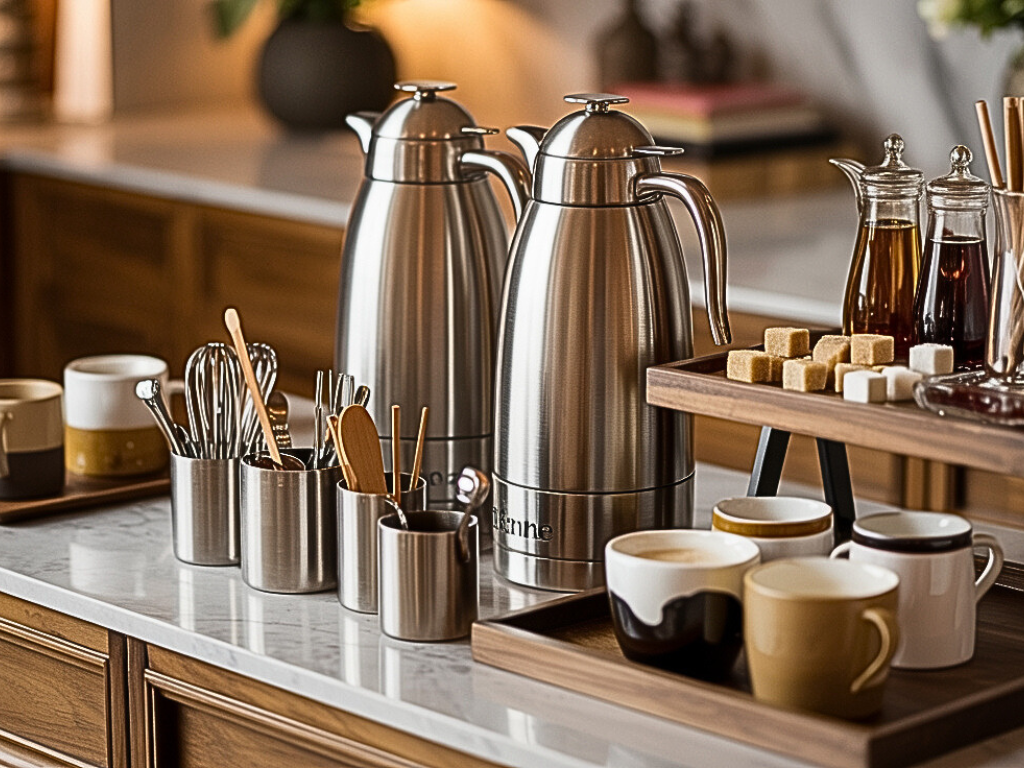
Think about hotel breakfast buffets. They don’t put out six croissants for forty guests. They create visual plenty so no one hesitates to take what they want.
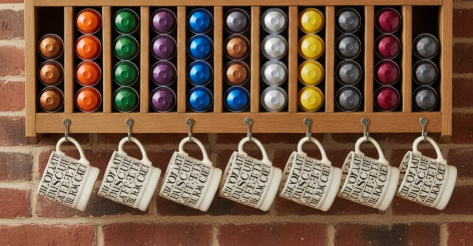
Your coffee bar needs eight mugs minimum, even if you’re serving two people. The hot chocolate station should overflow with marshmallows. Your cocktail bar requires multiple bottles, not single servings hiding behind flowers.
Abundance isn’t wasteful. It’s the foundation of gracious hosting. Guests relax when they see plenty available.
This principle applies to variety too. A coffee station with only regular coffee feels limited. Add decaf, flavored options, and tea choices. Your bar becomes genuinely useful instead of just decorative.
Layered: Multiple Heights Create Function and Beauty
Flat surfaces force reaching, blocking, and frustration. Layered heights solve these problems while creating visual interest.
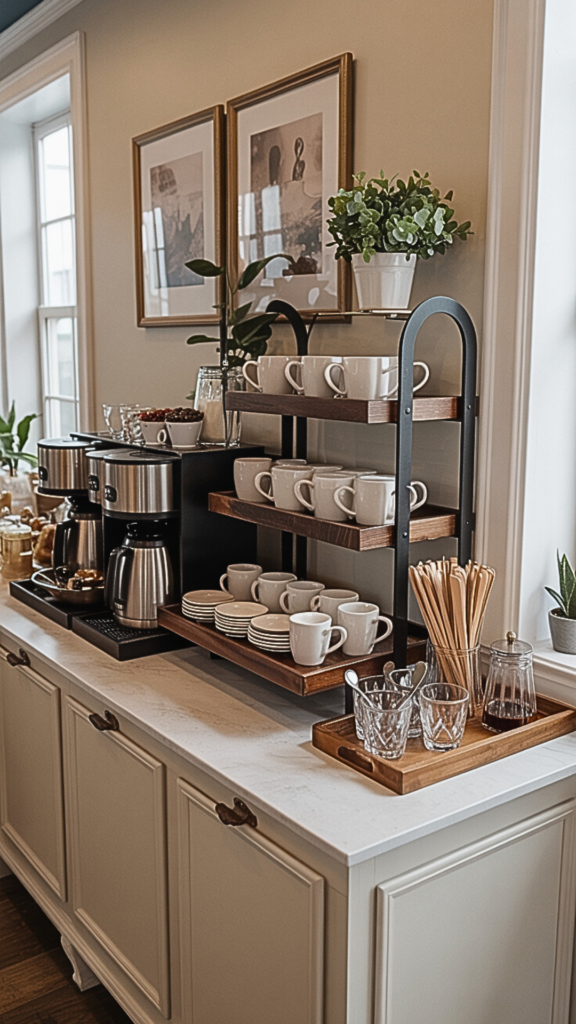
Use risers, cake stands, books, or small boxes under linens. Create at least three distinct height levels. This ensures everything remains visible and accessible.
Picture a hot chocolate station. Mugs sit on the counter. A tiered tray holds toppings at mid-height. A tall dispenser contains the cocoa. Guests can see every element without moving anything.
Compare that to everything sitting flat. Toppings hide behind mugs. The cocoa container blocks the spoons. Someone has to reorganize just to make a drink.
Layering also controls traffic flow. Place the most-used items at easiest-to-reach heights. Less-used garnishes can sit higher or lower.
The visual impact is bonus. Varied heights create the “designed” look that makes bars Instagram-worthy. But function comes first.
Organized: Clear Zones Guide Self-Service
Organization means guests understand the flow without instruction. Like items group together. The sequence follows logical order.
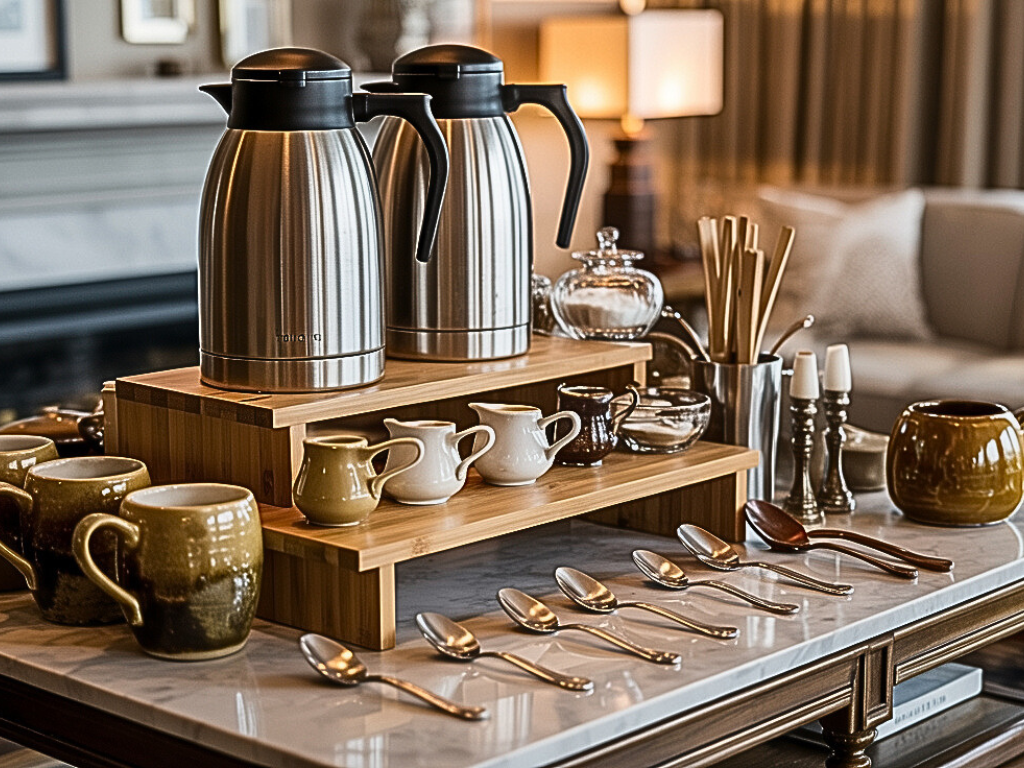
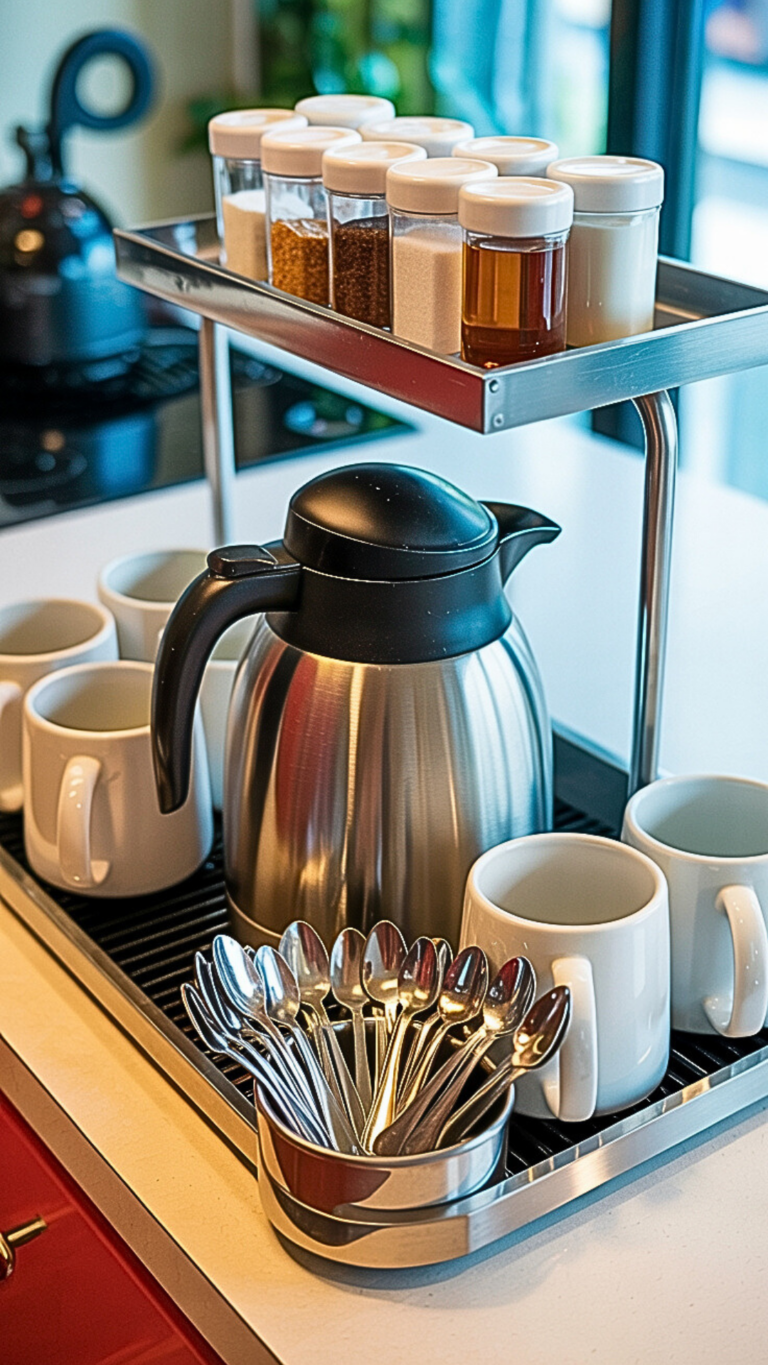
A coffee station flows like this: cups, coffee, cream and milk, sweeteners, stirrers. Left to right or back to front. Never scattered randomly.
Use containers to create visual boundaries. Sugar in one bowl, sweetener packets in another. Not mixed together forcing people to hunt.
Label when helpful but don’t over-label. A container of stirrers doesn’t need a label. But three different coffee blends do. Trust guests’ intelligence while eliminating confusion.
Consider the grab-and-go sequence. What do guests need first? That goes at the start. What’s the final touch? That comes last.
A bar cart for mocktails should place glassware first. Then ice. Then mixers and juices. Finally garnishes. Following the build order makes self-service intuitive.
Clear organization also means proper containers for each element. Napkins in a holder, not loose in a pile. Lemon wheels in a small bowl, not crowding the ice bucket.
Within Reach: Everything Accessible for Self-Service
Nothing should require reaching behind, leaning over, or moving other items. Every element must be accessible from a natural standing position.
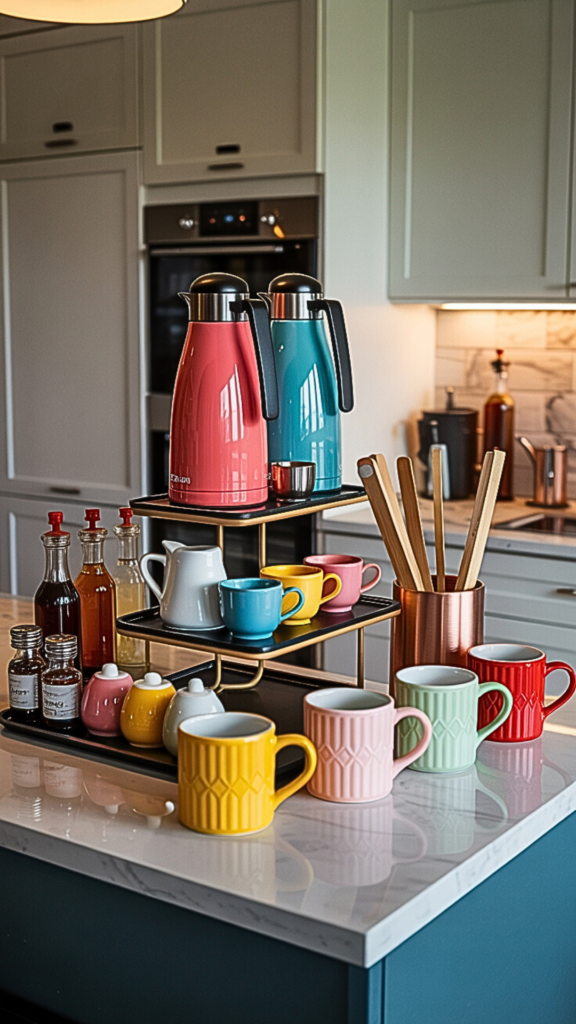
Test your setup. Stand where guests will stand. Can you grab everything you need comfortably? If anything requires awkward reaching, reorganize.
The most-used items belong front and center at waist height. Regular coffee gets prime position. Decaf can sit slightly to the side.
Don’t bury frequently-needed items behind decorative elements. Greenery and styling accessories belong in background positions. Functional elements command the spotlight.
This principle especially matters for stations with height. That gorgeous tiered tray looks beautiful but fails if the top tier sits too high to reach. Keep regularly-used items at easily accessible levels.
Remember, guests won’t move your carefully arranged setup. If something’s inconveniently placed, they’ll skip it rather than disturb your styling. Make everything genuinely usable.
Styled: Cohesive Aesthetics Complete the Experience
Once function is perfected, styling brings everything together. Cohesion means intentional choices in color, texture, and materials.
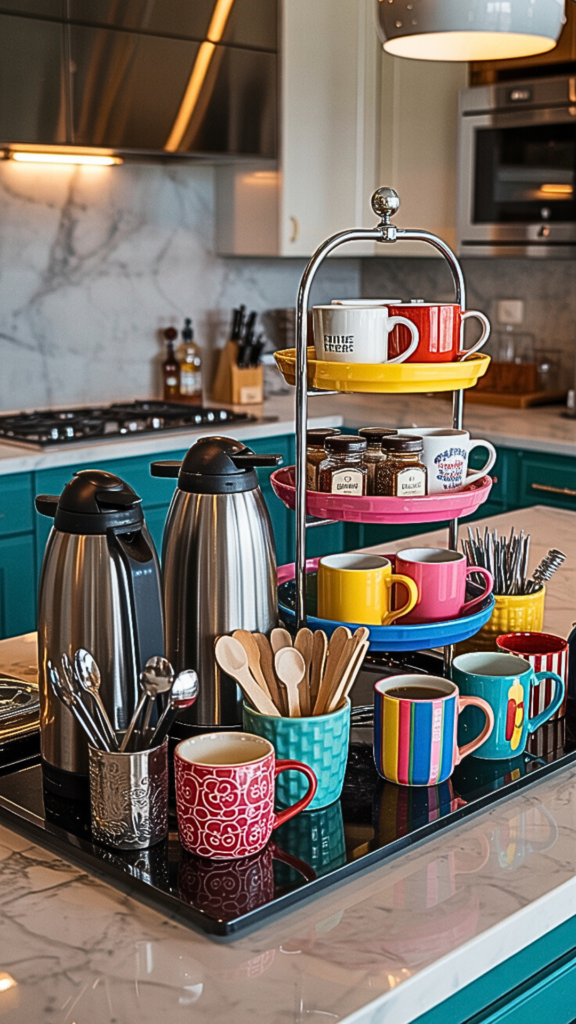
Choose a color palette and stick to it. All white ceramics create classic elegance. Mixed metals add collected charm. Coastal blues communicate relaxed entertaining.
You’re not matching everything. That looks sterile. You’re creating relationships between elements. The wooden tray echoes the wooden stirrers. The brass ice bucket coordinates with brass drawer pulls.
Texture matters as much as color. Smooth ceramics pair beautifully with rough linen napkins. Sleek glass mixes well with natural greenery. Create contrast without chaos.
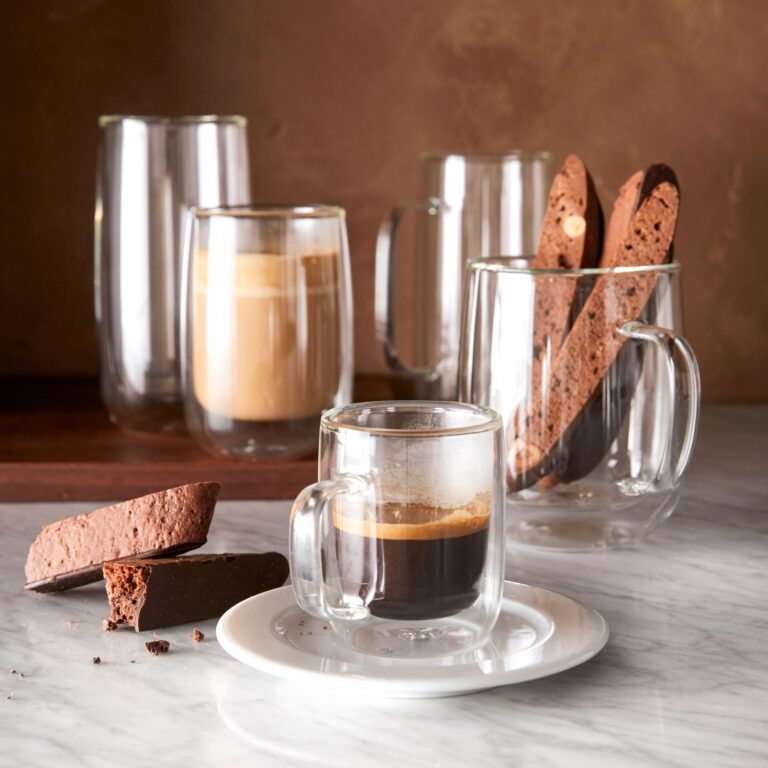
Containers should feel intentional. Glass for transparency, ceramic for warmth, metal for shine. Each choice serves the overall aesthetic while remaining functional.
The best styling feels effortless. Guests notice the beauty without seeing the calculation behind it. That’s when you know styling serves the space rather than overwhelming it.
How to Apply the FLOWS Method to Any Bar or Station
Ready to create a bar or station that truly flows? Follow this process.
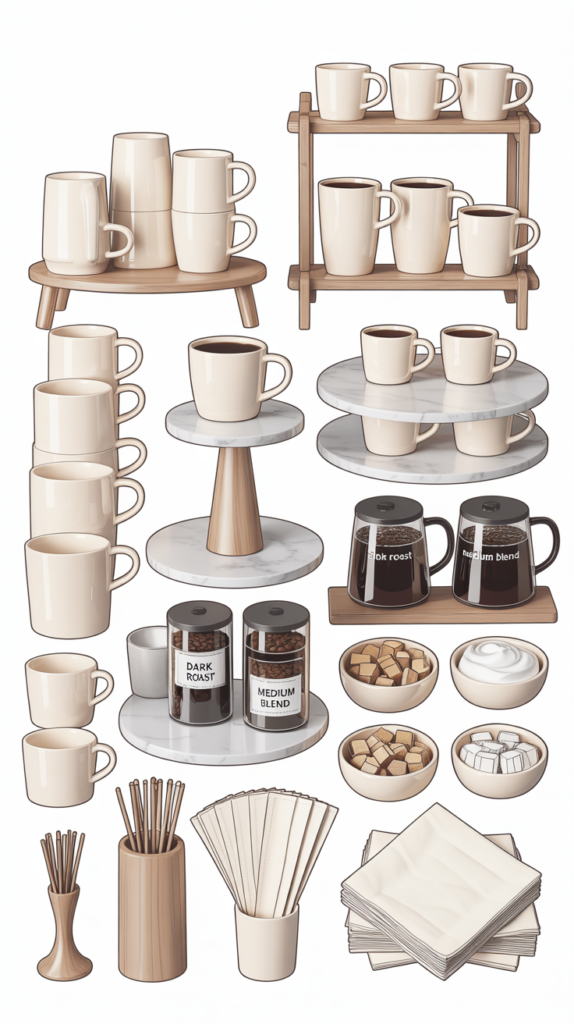
Start with function. What will guests actually need? List every single element before considering aesthetics. Coffee needs cups, coffee itself, cream, sugar, sweeteners, stirrers, napkins, and spoons minimum.
Next, assess your space. Measure your counter, cart, or table. Determine how many height levels you can realistically create. Sketch rough zones for each element group.
Gather more than you think you need. Remember the Fully Stocked principle. Better to have abundant backup supplies than run out.
Set up your layers first. Position risers, stands, and height-creating elements. Test accessibility by reaching for items from a standing position. Adjust until everything sits within comfortable reach.
Add your functional elements next. Place items following logical sequence. Test the flow by walking through the motions of making a drink.
Step back and evaluate organization. Are zones clear? Does the eye understand where to start? Can guests serve themselves without confusion?
Finally, add styling elements. Introduce your color palette through containers and linens. Add texture through natural elements. Keep styling secondary to function.
The Difference the FLOWS Method Makes
Bars and stations that follow these principles transform entertaining. You’re not frantically playing bartender. You are not reorganizing every five minutes. You’re not apologizing because the sugar bowl is empty.
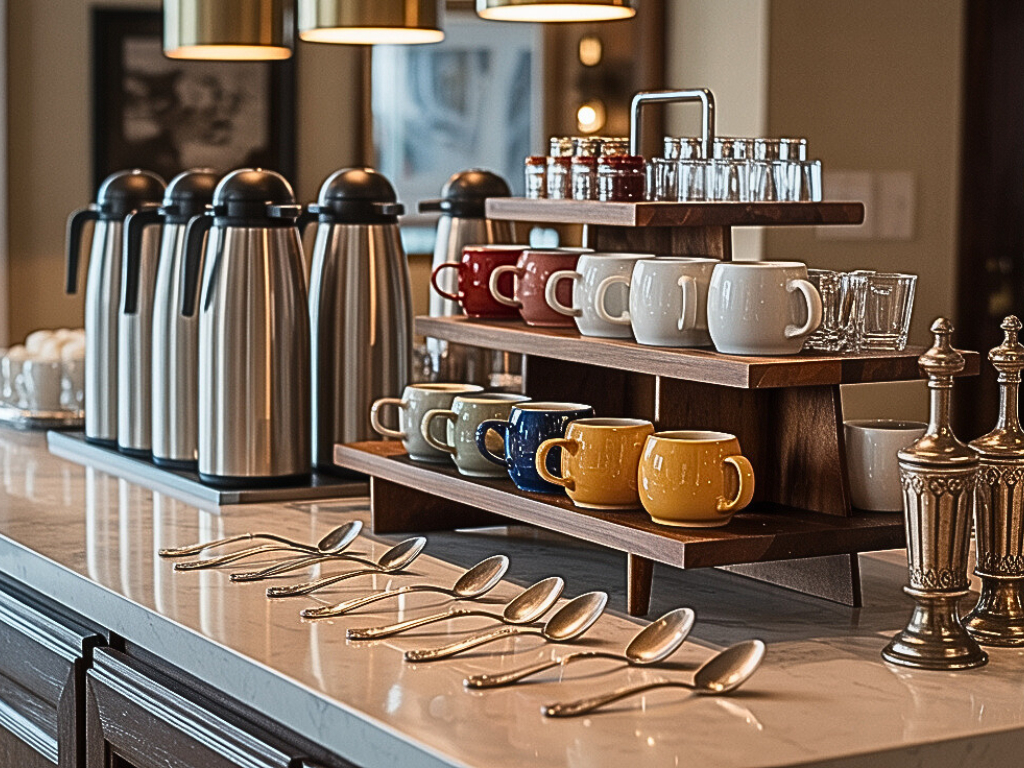
Instead, guests confidently help themselves. Conversations flow without interruption. Your space looks magazine-worthy while actually working for real life.
The FLOWS Method isn’t about perfection. It’s about intentional design that serves both beauty and function. When these five principles work together, entertaining becomes genuinely effortless.
Every bar and station we feature on Bars and Stations demonstrates the FLOWS Method. We’ll show you how each principle applies to different setups. From coffee bars to cocktail carts, from party stations to everyday beverage setups, FLOWS makes the difference between decoration and true hospitality.
Ready to create bars and stations that actually work? Start with FLOWS.
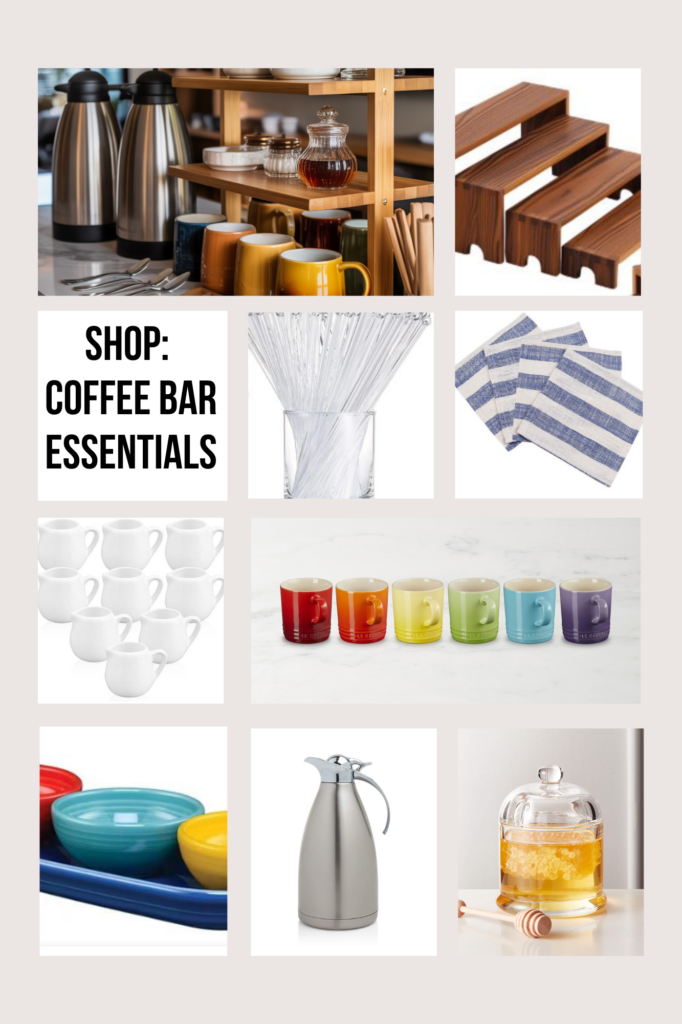
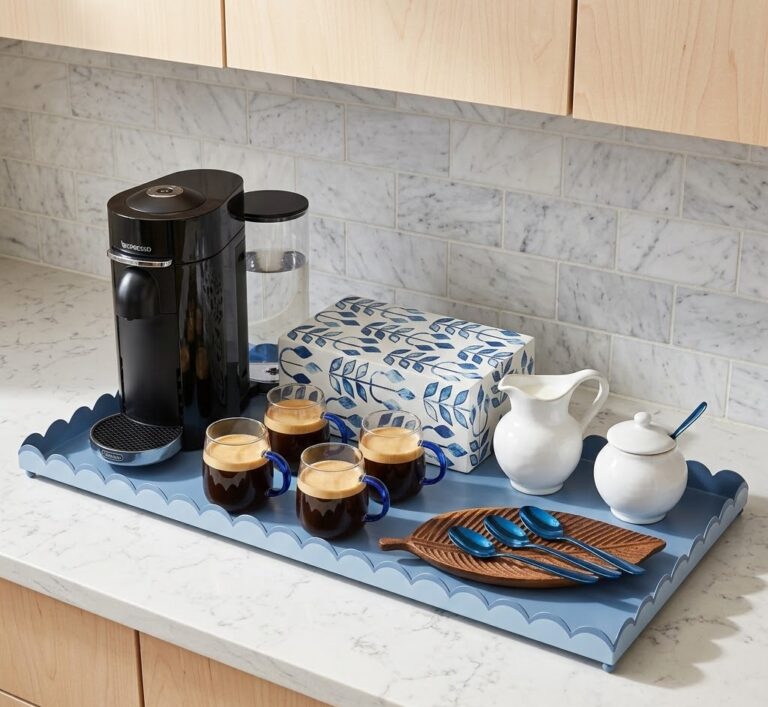
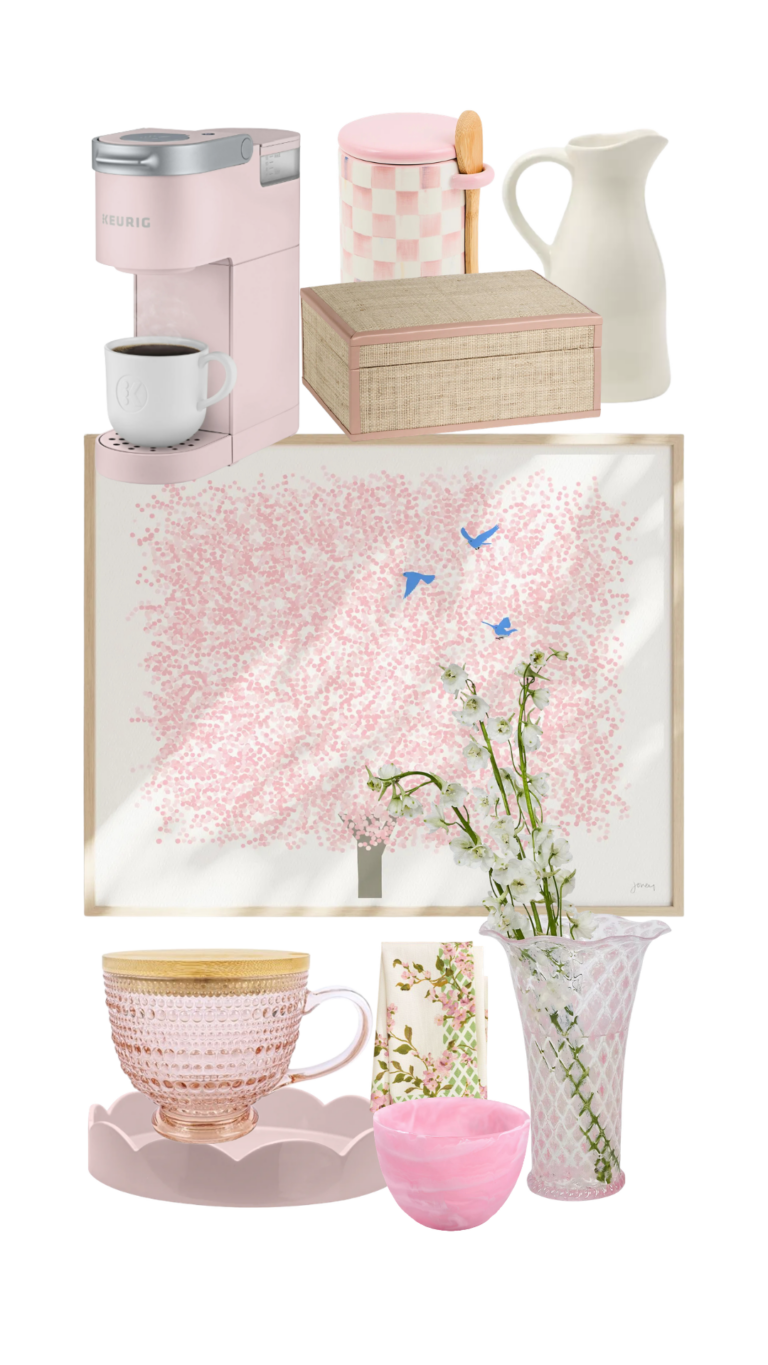
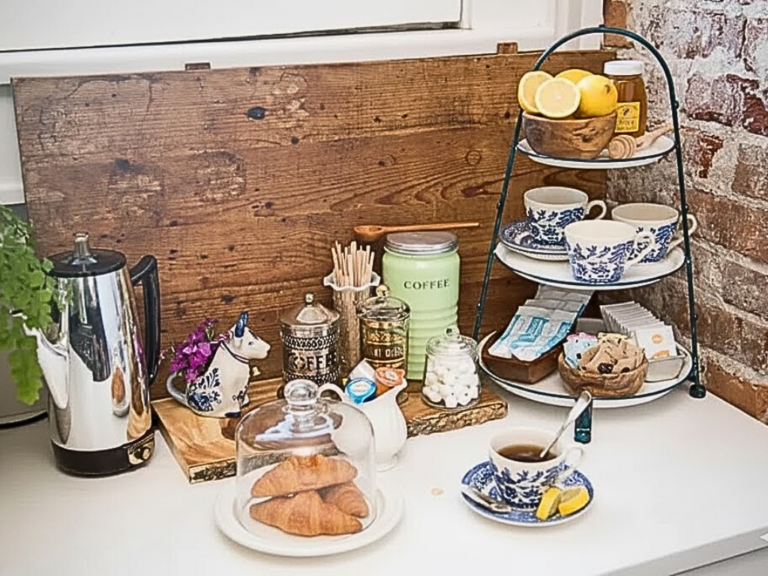
Ready to style a coffee bar at home? Here’s a blueprint and sources to get you started: