Mini Coffee Bar Small Spaces
How to Turn 12 Inches Into a Full Coffee Bar
Most coffee setups sprawl. This one contains.
Twelve inches becomes a jewel box — a suspended display of the essentials you actually use.
Suspended, not stacked. Elevated, not crowded.
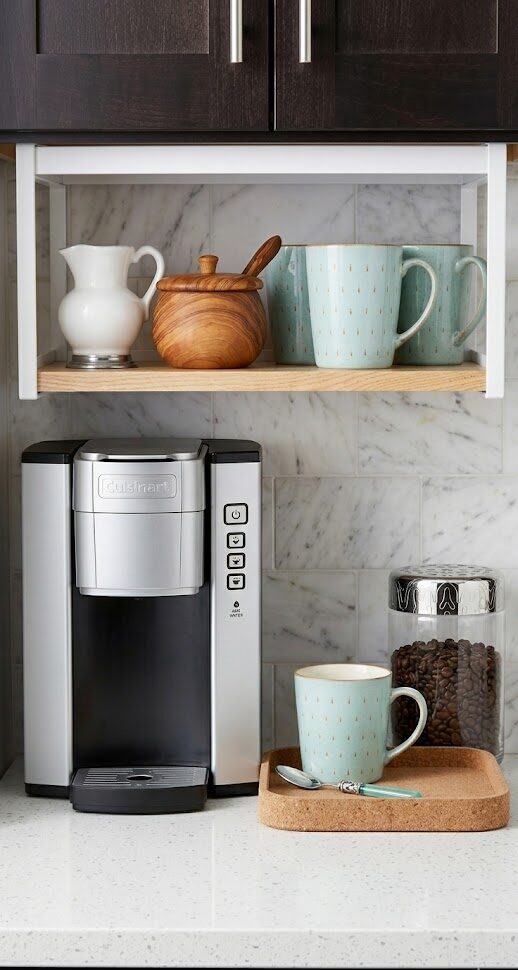
The secret isn’t sacrifice. It’s vertical space. An under-cabinet tension shelf turns a cramped counter into a two-tier coffee bar that holds everything: your coffee maker, mugs, cream, sugar, and the one gorgeous piece that makes it yours.
Small doesn’t mean settling. It means curating.
The 3-Second Install That Changes Everything
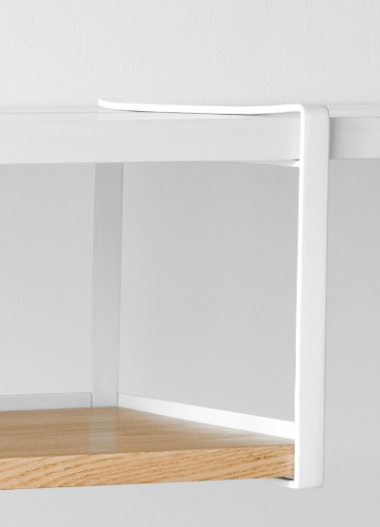
This isn’t carpentry. It’s tension mounting.
The shelf hooks under your upper cabinets and expands to fit any width. No drilling. Absolutely no damage. No tools required.
The slim metal brackets (less than a quarter-inch thick) sit flush against the cabinet bottom, so doors close normally. Full overlay, partial overlay, and most inset cabinet styles work fine.
Three seconds to install. Instantly removable. Renter-approved.
The transformation happens the moment you add that second tier. What was a crowded 12-inch counter becomes an organized coffee station with room to breathe.
The Jewel Box Philosophy
Small coffee bars force you to edit. That’s not a limitation — it’s luxury.
Instead of six mediocre mugs, you choose one gorgeous one. Instead of cluttered canisters, you select pieces that earn their place. Every item becomes intentional because space demands it.
Jewel boxes hold treasures, not junk.
This mindset shift reframes your entire approach. You’re not cramming a coffee bar into 12 inches. You’re creating a curated display of essentials that happens to function flawlessly.
The result looks deliberate, not desperate. Like you chose restraint rather than had it forced on you.
How FLOWS Makes 12 Inches Work
The FLOWS Method ensures your compact coffee bar functions as well as it looks. Here’s how each principle applies to jewel box setups:
Fully Stocked
Two tiers = double the capacity. Your shelf holds serving pieces (mugs, cream, sugar) while the counter holds working pieces (coffee maker, beans). Everything you need for a complete coffee service fits within one foot of counter width.
The vertical arrangement means you’re not choosing between function and storage. You get both.
Layered
Literal vertical layering creates visual interest and practical access. Lightweight items (mugs, cream pitcher) live on the upper shelf. Heavier items (coffee maker, bean canister) stay grounded on the counter.
This isn’t just aesthetic. It’s physics. Heavy items down, light items up prevents toppling and makes the whole setup feel stable.
Organized
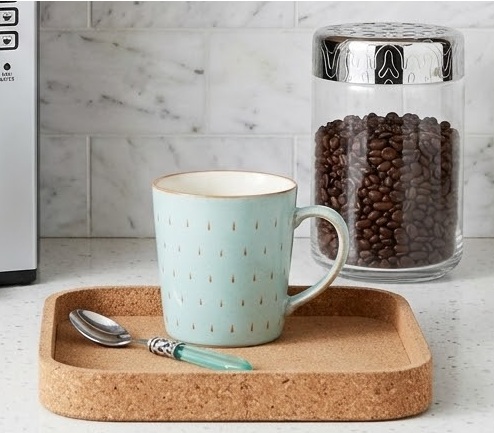
The cork tray on the counter defines your “working zone” — where mugs sit while being filled. The shelf holds “serving pieces” — what guests reach for when customizing their drinks.
This separation prevents counter clutter and makes the system obvious to anyone using it. They instinctively know what goes where.
Within Reach
Everything sits at comfortable eye level or below. The shelf height (typically 10-12 inches below upper cabinets) puts mugs and sugar within easy reach. The counter-level coffee maker doesn’t require stretching or awkward angles.
Compact doesn’t mean compromised access. If anything, the tight arrangement means less reaching across wide expanses to grab what you need.
Styled
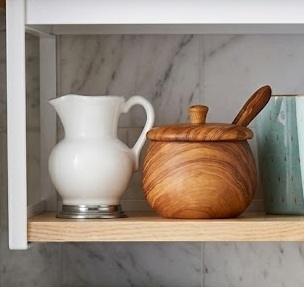
Jewel box styling means intentional choices. The soft aqua ceramic mugs create color cohesion. The olivewood sugar bowl adds organic warmth. The white ceramic creamer with pewter base bridges elegant and functional.
These aren’t random picks. They’re curated pieces that work together visually while serving distinct purposes. Form and function occupy the same space.
The Shelf That Makes It Possible
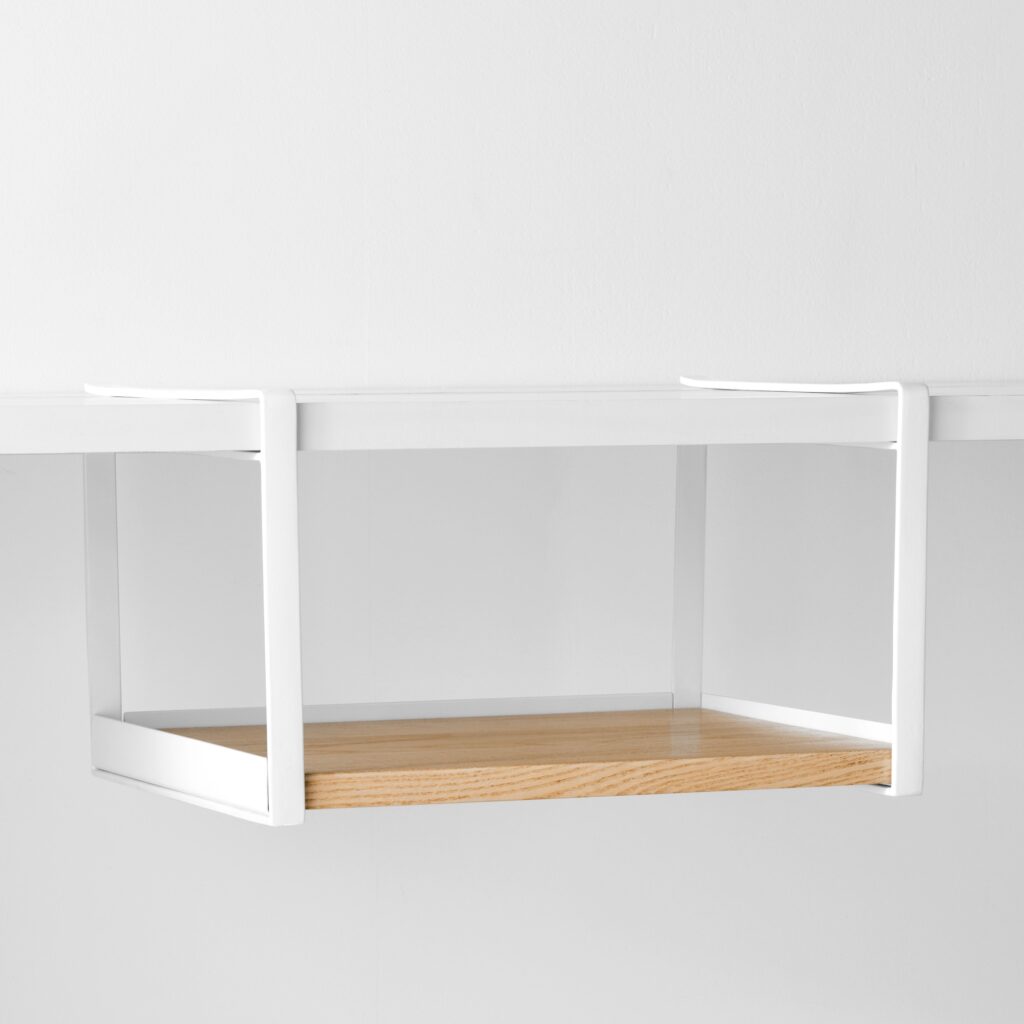
Under-Cabinet Tension Shelf – White Frame with Wood Surface Price Range: $20-47 depending on retailer
The white metal frame with natural wood shelf surface reads modern without being cold. It’s the upscale version of utilitarian under-cabinet storage — the kind that looks intentional, not makeshift.
Key features:
- No-drill tension mounting
- Slim profile (doesn’t interfere with cabinet doors)
- Weight capacity handles multiple ceramic mugs and glass vessels
- White and wood finish coordinates with most kitchen styles
Alternative Options:
Budget Version ($20): Basic metal frame with white finish. Same mechanism, more utilitarian aesthetic. Works perfectly if you’re prioritizing function over finish. Expands from 10-18″ for a more customized fit.
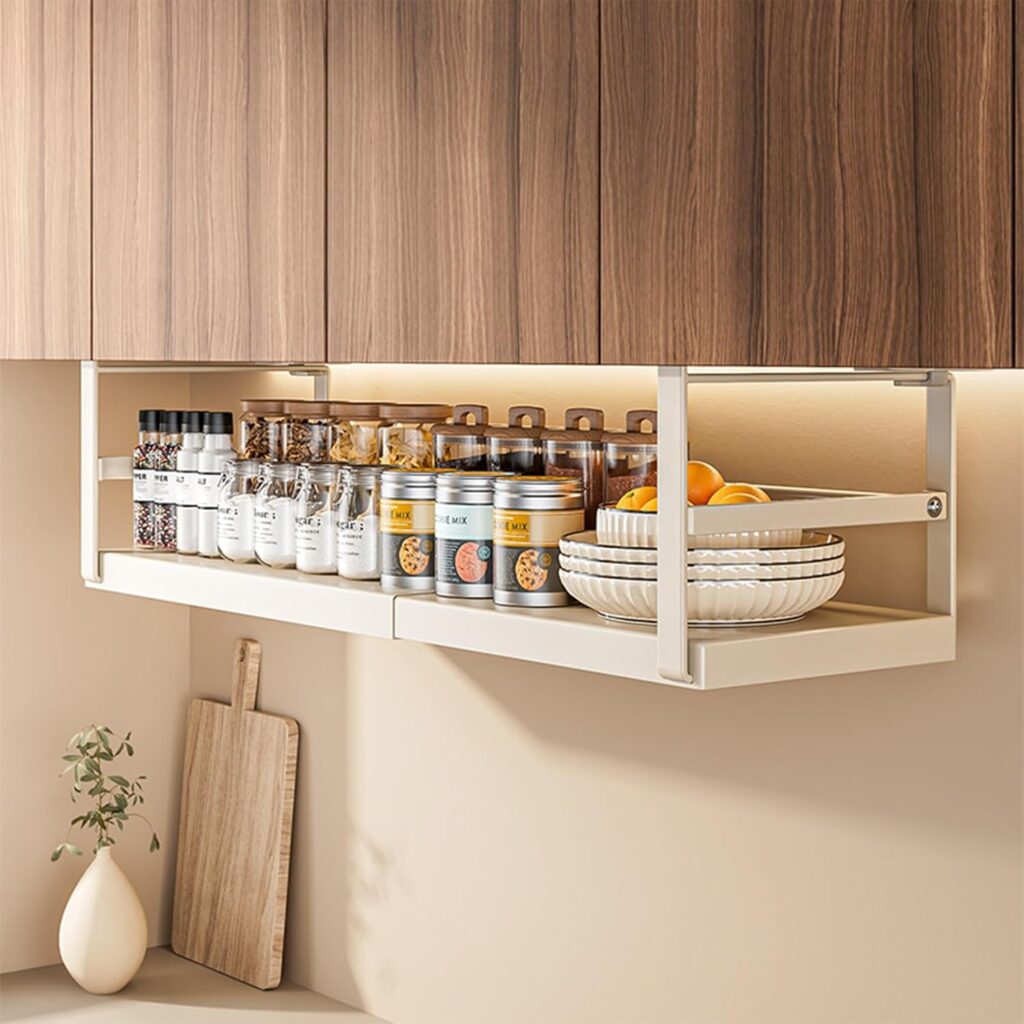
Black metal ($29): More contemporary in appearance. Set of 2 allows multiple uses
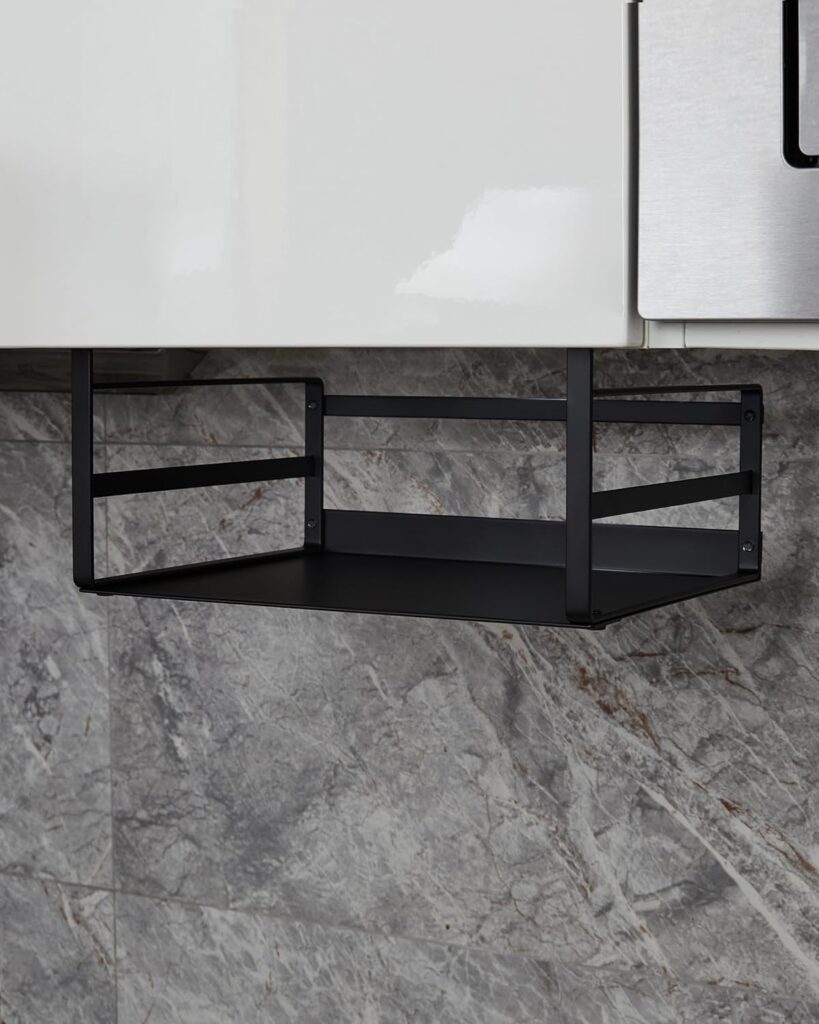
The shelf you choose sets the tone for your entire coffee bar. Select based on your kitchen’s existing aesthetic and how much you value that “jewel box” polished look.
Building Your Jewel Box Coffee Bar
Here’s exactly what creates the setup shown:
Counter Level (The Working Tier)
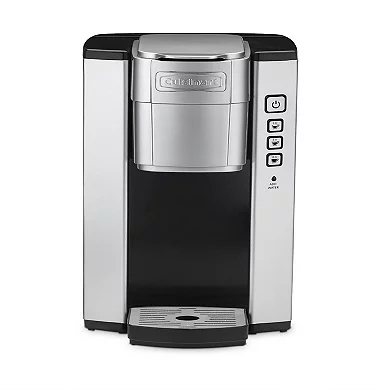
Cuisinart Single-Serve Coffee Maker
Compact footprint (approximately 6 inches wide) makes this ideal for tight spaces. The single-serve model means no bulky water reservoir or oversized brewing basket. Stainless and black finish bridges modern and professional.
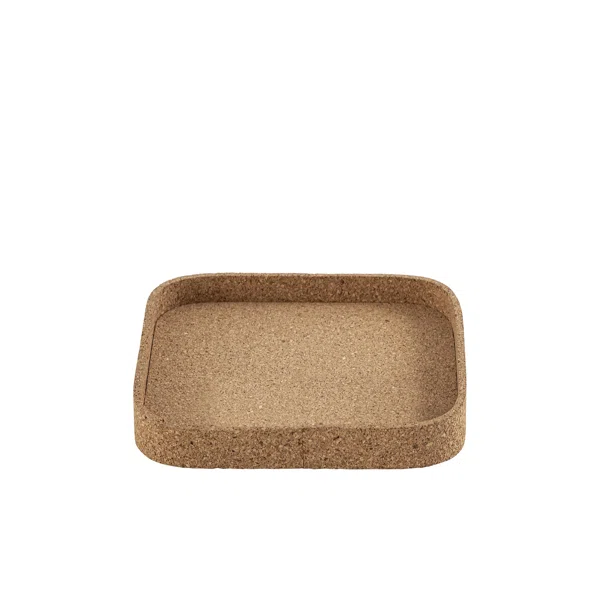
Small Cork Tray (9×9 inches)
Defines your working zone and catches drips. The natural cork adds warmth without competing with other wood tones. Small enough not to dominate the limited counter space but large enough to hold a mug and spoon.
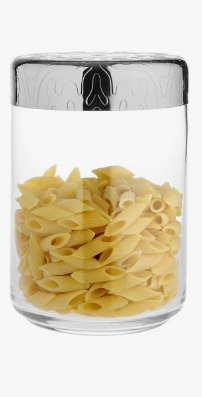
Glass Canister with Stainless Sculpted Lid (4-inch diameter)
Clear glass lets you see your coffee bean supply. The stainless lid coordinates with the coffee maker. Tall cylinder shape uses vertical space efficiently rather than spreading horizontally.
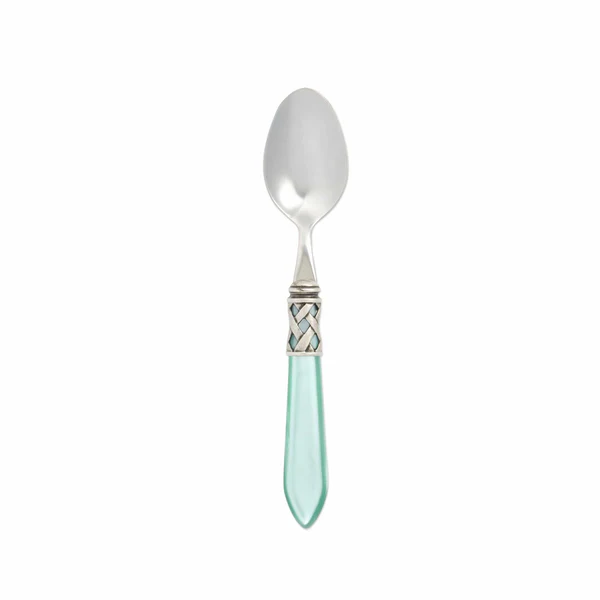
Elegant Silver Spoon with Aqua Resin Handle
The small detail that ties everything together. The aqua handle echoes the Denby mugs. The decorative metalwork on the handle elevates it beyond basic utility. It rests on the cork tray as part of the styled presentation, not hidden in a drawer.
Shelf Level (The Serving Tier)
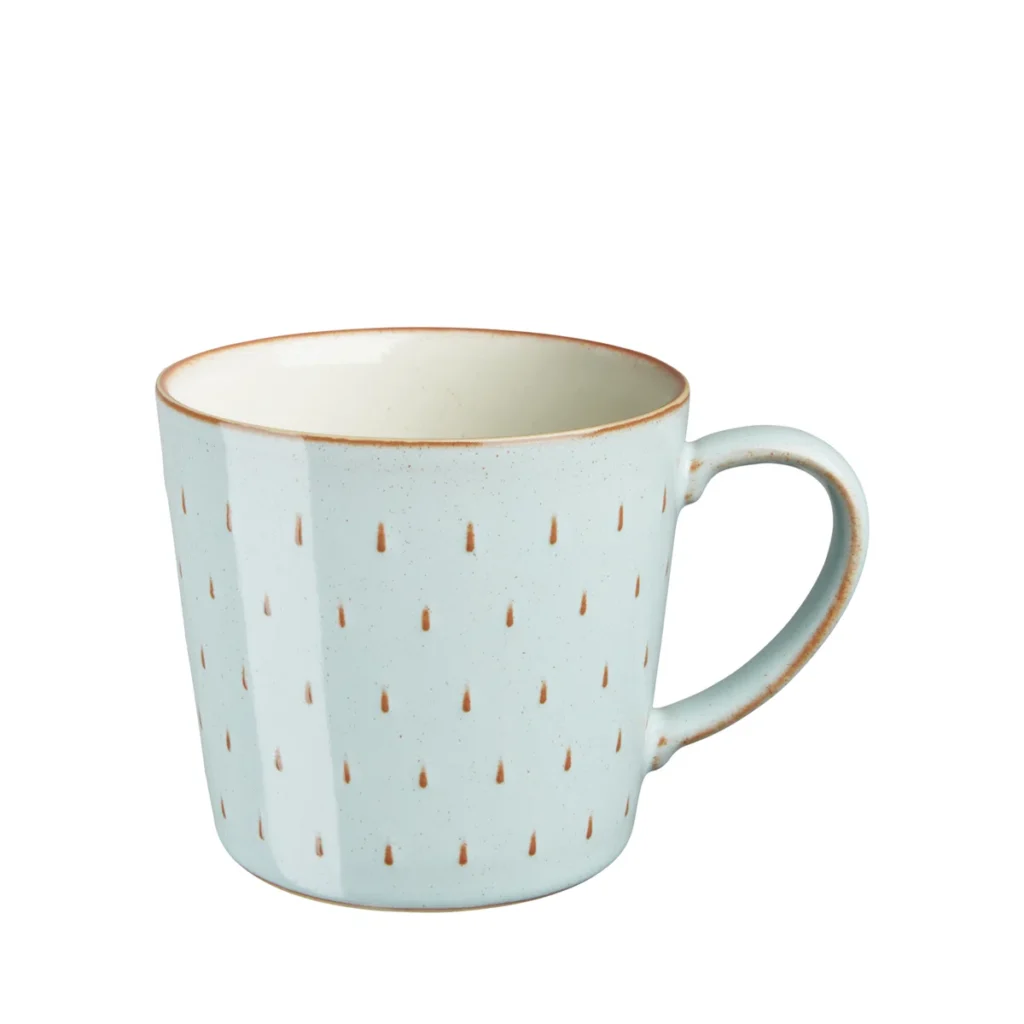
Denby Azure Cascade Handcrafted Mugs
The hero piece. Soft aqua-blue glaze with speckled texture and warm brown rim. Handcrafted ceramic feels substantial, not flimsy. The featured mug sits on the cork tray while 2-3 additional mugs live on the shelf.
This is your “one gorgeous mug” — the piece that elevates the entire setup from functional to beautiful.
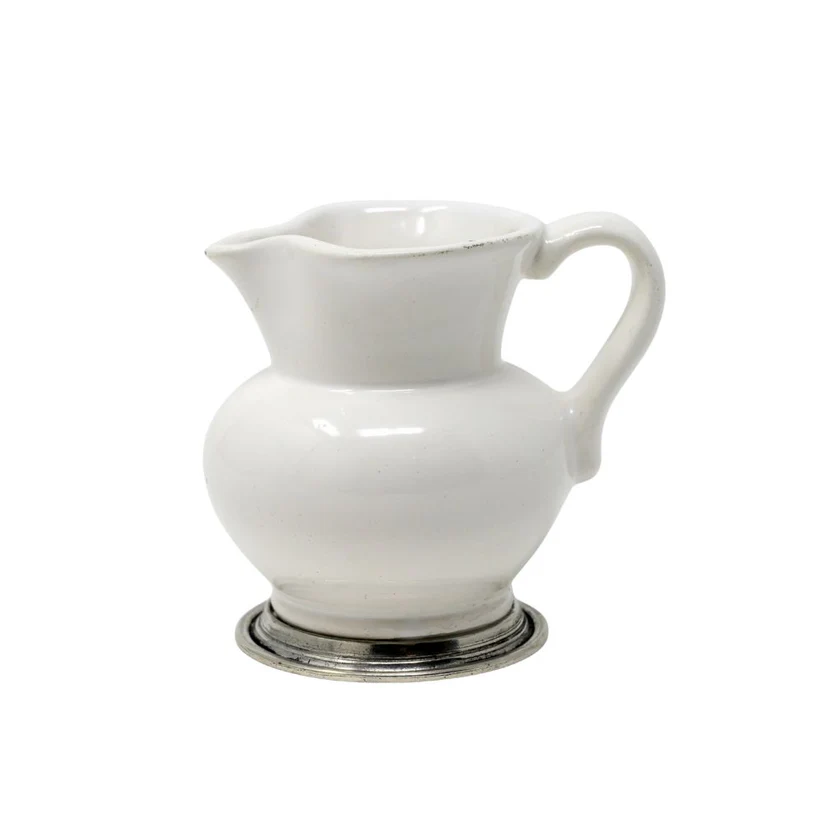
White Ceramic Creamer Pitcher with Pewter Base
Classic white ceramic with pewter detail at the base. The metal accent bridges the stainless coffee maker and the ceramic mugs. Small enough not to dominate the shelf but substantial enough to hold cream for multiple servings.
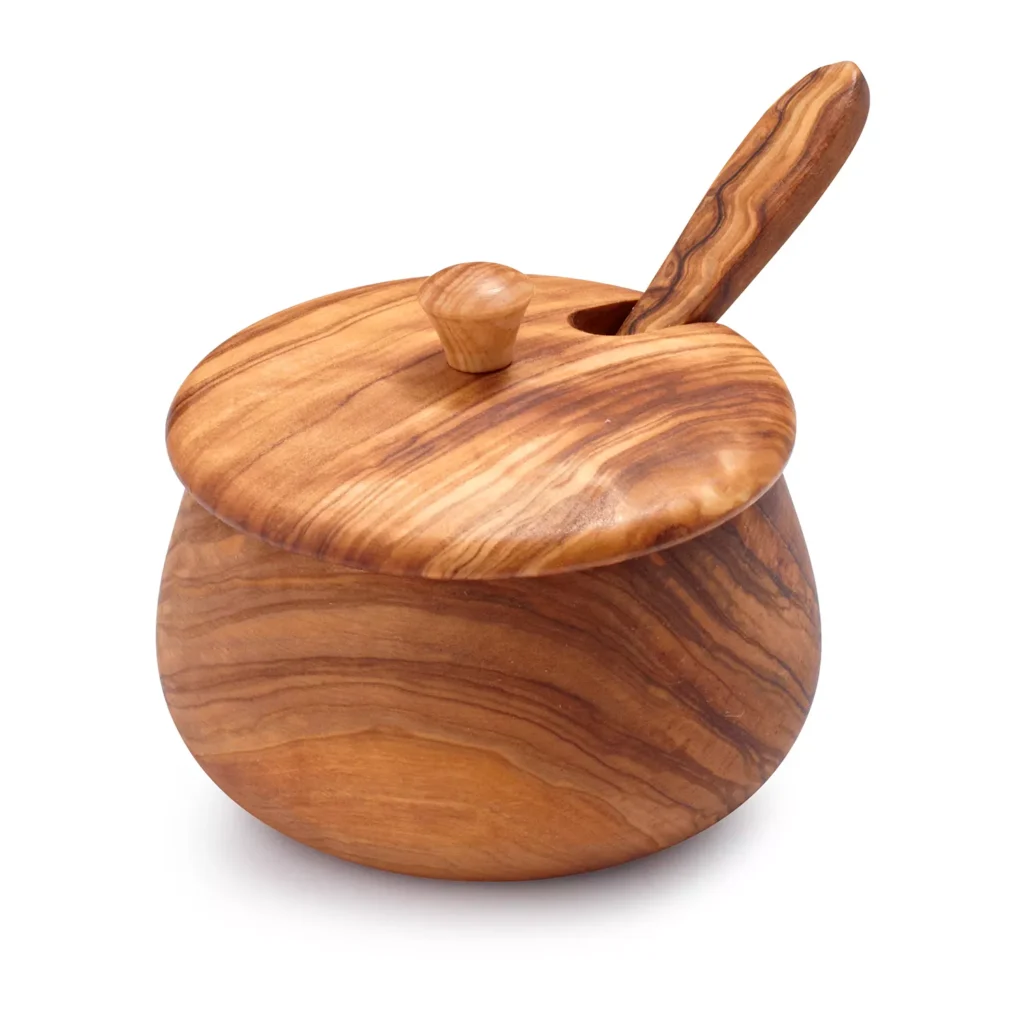
Olivewood Covered Sugar Bowl with Spoon
Handcrafted olivewood brings organic texture. The covered design keeps sugar fresh and looks intentional (not like you just set out a sugar bag). The included wooden spoon adds a functional detail that doubles as styling.
This piece warms the entire color palette and prevents the setup from reading too clinical.
Setup Strategy: Making It Actually Work
Install your under-cabinet shelf first, before placing any items. This lets you adjust the width to match your available counter space exactly.
Position items on the shelf from left to right: creamer, sugar bowl, mugs. This order creates a visual flow and puts the most-reached-for items (mugs) on the outer edge for easy access.
On the counter, place the coffee maker on the left, cork tray in the center, bean canister on the right. This left-to-right workflow (brew, prep, refill) makes logical sense for right-handed users. Reverse it if you’re left-handed.
Keep the featured mug on the cork tray at all times, even when not in use. This maintains the styled look and signals “this is where mugs go” to anyone making coffee.
The small footprint means you can position this setup anywhere: between appliances, in a corner, at the end of a galley kitchen. It doesn’t need a dedicated “coffee bar zone” — it creates one in whatever 12 inches you give it.
What Makes This Actually Jewel Box
It’s not the size. It’s the curation.
Every item serves a dual purpose: function and beauty. The olivewood sugar bowl keeps sugar fresh AND adds organic warmth. The aqua mugs hold coffee AND create color cohesion. The cork tray catches drips AND defines the working zone.
Nothing here is purely decorative. Nothing is purely functional. Each piece earns its place by doing both jobs well.
That’s jewel box thinking. When space is limited, items can’t afford to be one-dimensional. They work hard or they don’t belong.
The result is a coffee bar that photographs like an editorial spread but functions like a commercial cafe setup. Beautiful and bulletproof.
Beyond the 12-Inch Setup
This same vertical approach works for other compact coffee bar scenarios:
Apartment galley kitchens: The tension-mount shelf doesn’t require landlord approval. Install today, remove when you move, leave no trace.
Office coffee stations: Professional aesthetic, no drill holes in corporate property. The 12-inch footprint fits on shared break room counters without monopolizing space.
Dorm rooms or small bedrooms: Create a personal coffee bar without taking up floor space or requiring furniture. The wall-mounted approach keeps surfaces clear.
Between major appliances: That awkward 12-18 inch gap between your refrigerator and wall becomes prime coffee bar territory instead of dead space.
Corner counters: L-shaped kitchens often have corner counter sections that are too small for food prep but perfect for a vertical coffee station.
The shelf system scales to any width between 12-24 inches, so you’re not locked into exactly 12. If you have 15 inches, use 15. If you only have 10, find a smaller tension shelf designed for tighter spaces.
The Investment Breakdown
Total for Complete Setup Shown: $628.93
- Under-cabinet shelf: $46.99
- Cuisinart single-serve coffee maker: $159.99
- Azure ceramic mugs (set of 3): $84.00 ($28 each)
- White ceramic creamer pitcher: $74.00
- Olivewood sugar bowl: $59.95
- Aqua handle spoon: $36.00
- Cork tray (9×9″): $25.00
- Glass kitchen canister: $115.00
- Plus tax and shipping
This is a $628 investment in pieces you’ll use every single day for years. Compare that to a dedicated coffee bar cart ($300-500) plus the floor space it permanently occupies, or a built-in coffee station renovation ($2,000+).
More importantly, these aren’t disposable pieces. The under-cabinet shelf doesn’t wear out. Quality ceramic mugs last decades. The olivewood sugar bowl becomes more beautiful with age and use.
Break it down to cost-per-use: $628 ÷ 365 days per year ÷ 5 years = $0.34 per day for a complete, curated coffee bar that doesn’t sacrifice valuable counter space. That’s less than a single coffee shop latte.
What You’re Really Buying
Not just a shelf. Not just mugs.
You’re buying back 12 inches of counter space that would otherwise sit empty because it’s “too small for anything useful.” You’re buying the confidence that small spaces don’t mean settling for cluttered or makeshift solutions.
You are buying the daily ritual of making coffee in a space that feels intentional. Like someone who knows what they’re doing created this, not someone who jerry-rigged a solution because their kitchen is tiny.
That’s worth more than the itemized cost. That’s the jewel box premium.
Small, precious, holding only what matters. Your coffee bar just happens to fit in 12 inches.