Coffee Bar Kitchen Counter
Coffee Bar Kitchen Counter Ideas (No Installation Needed)
Hotel room service arrives on a tray. Breakfast in bed comes on a tray. Tea ceremonies unfold on trays.
But your daily coffee? It’s usually scattered across the counter next to last night’s dishes.
That’s the difference between function and ritual.
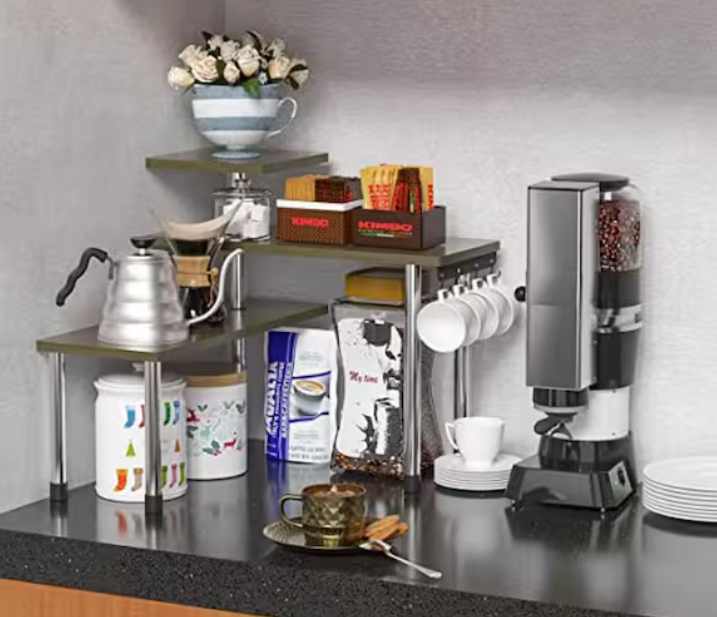
A tray turns an ordinary countertop coffee setup into a defined coffee station. It transforms a Keurig and a few canisters into something intentional. Instead of grabbing supplies from three different zones, you approach a small coffee bar designed for the moment.
And the best part? You don’t need shelves and you don’t need a cabinet. You don’t need more space.
If you have eighteen inches of counter, you have room for a coffee bar.
A tray changes the psychology of the space. It contains visual clutter while it creates boundaries. It signals that this isn’t overflow storage — it’s a destination.
That shift from chaos to ceremony requires no renovation. Just one well-chosen tray and thoughtful arrangement.
Shopping sources – scroll down
Why Trays Solve Kitchen Counter Coffee Chaos
Most kitchen counters host coffee as an afterthought. Canister by the stove. Mug near the sink. Spoons in the drawer. Syrup bottle migrating daily.
Even when clean, it reads as disjointed. Seven separate objects scattered across available space.
Trays create visual boundaries. Those seven items become one cohesive unit. The psychological shift matters more than the physical organization.
The counter suddenly feels less cluttered. Not because you removed items. Because you contained them within defined edges.
Eighteen inches of counter space becomes a destination. Not overflow storage that happens to include coffee supplies.
The Five Elements of a Functional Coffee Tray
A countertop coffee station works best when every item has a reason to be there — and a place to live.
1. Fully Stocked (Nothing Lives Elsewhere)
A true small coffee bar holds everything needed for your daily routine.
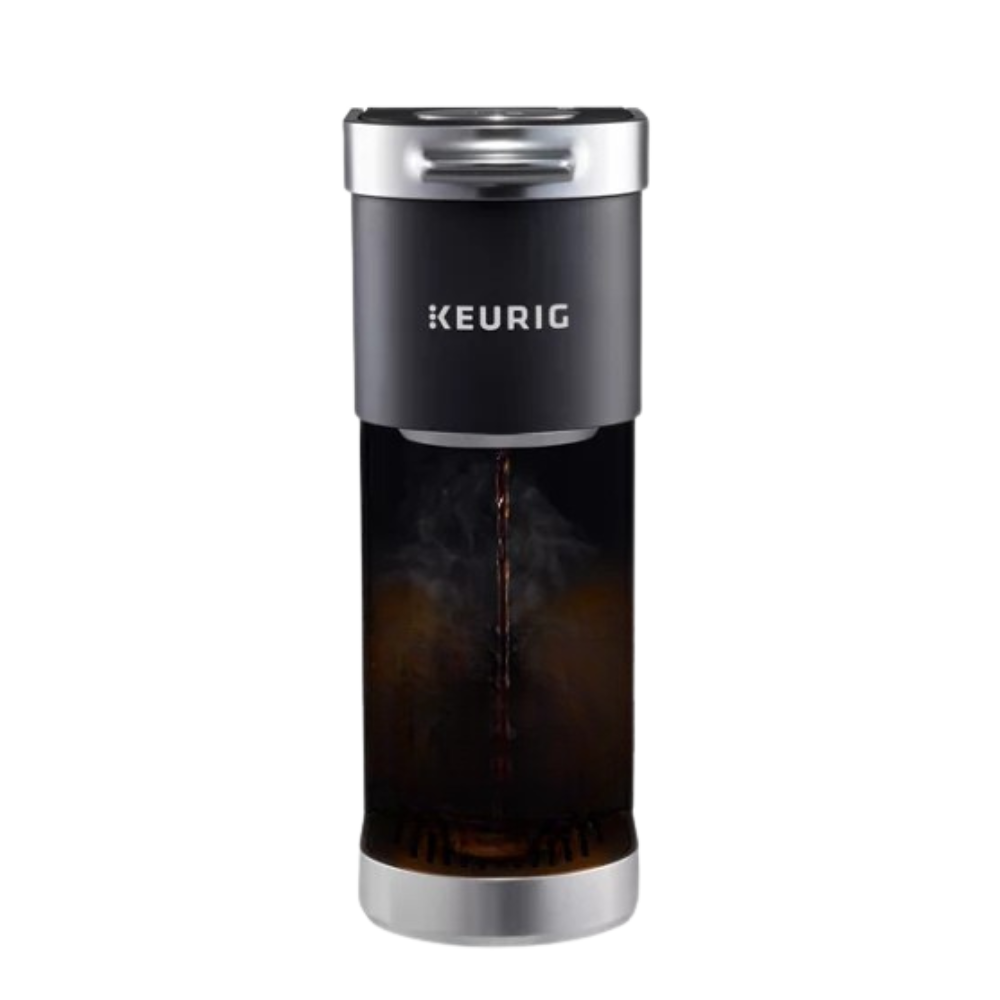
The coffee maker anchors one side. Compact single-serve machines are ideal for tray setups because their footprint stays manageable.
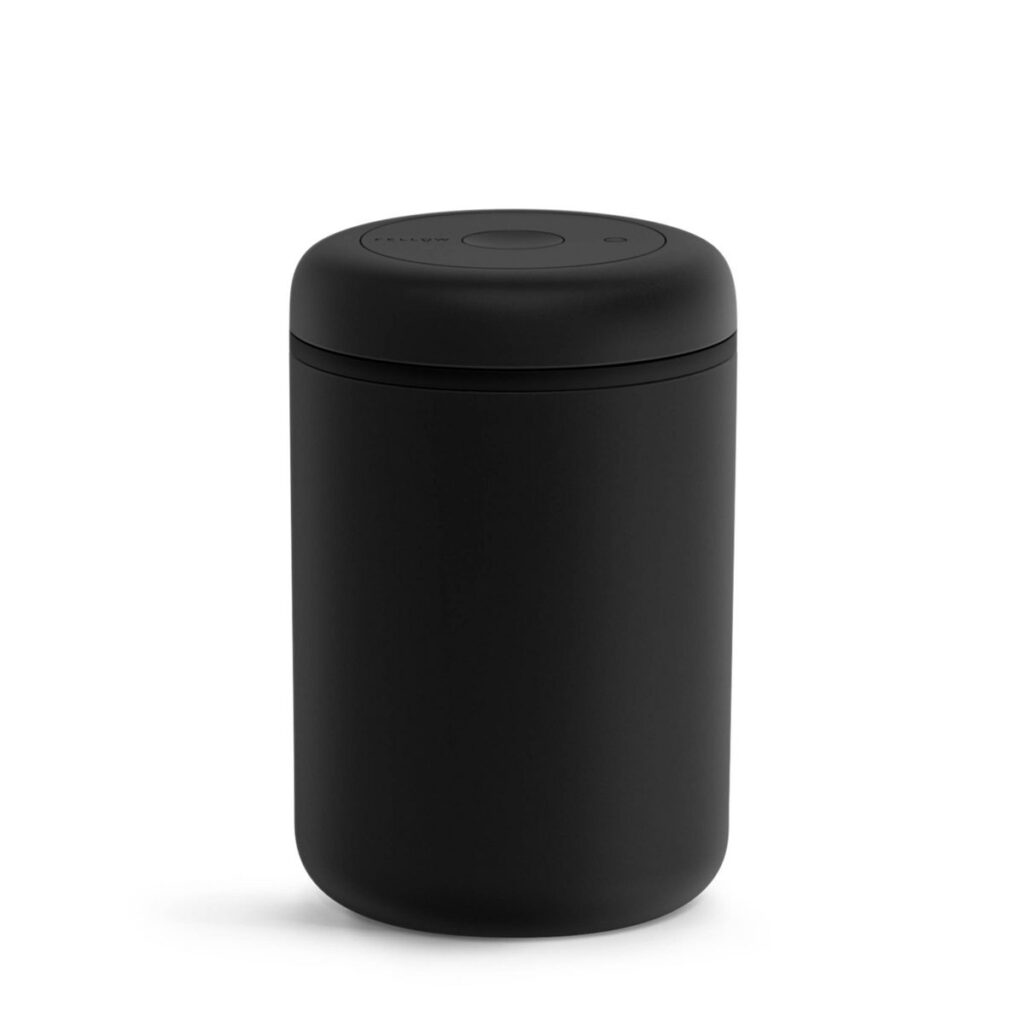
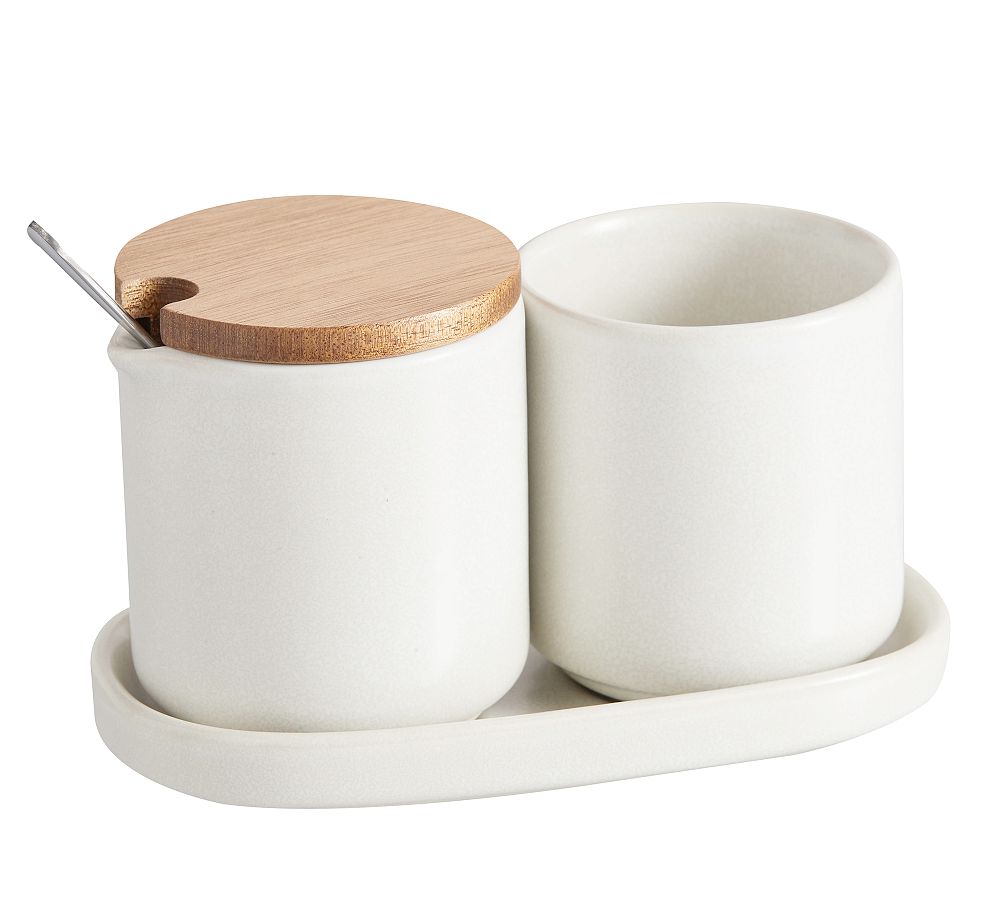
Canisters contain pods or beans. Sugar and cream have dedicated containers. Stirring spoons don’t hide in drawers.
The goal: no mid-routine scavenger hunt.
If you step up to the tray, everything you need is already there.
2. Layered (Flat Surfaces Need Height)
A tray without height looks like storage.
A tray with height looks styled.
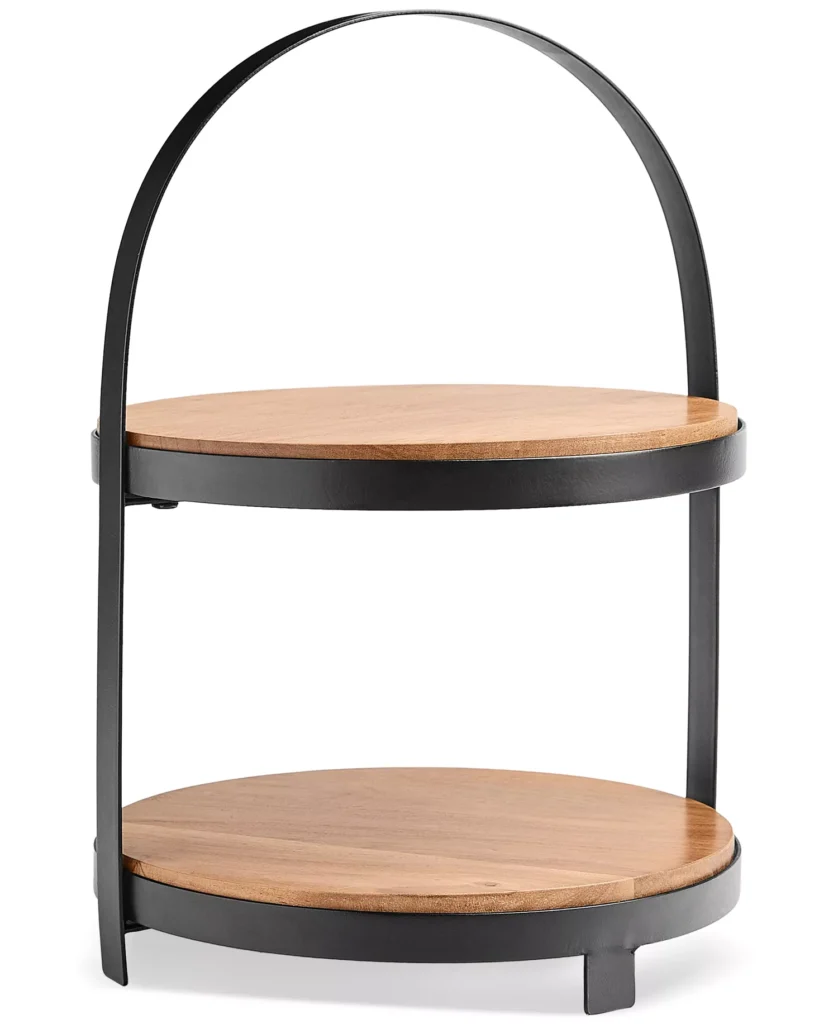
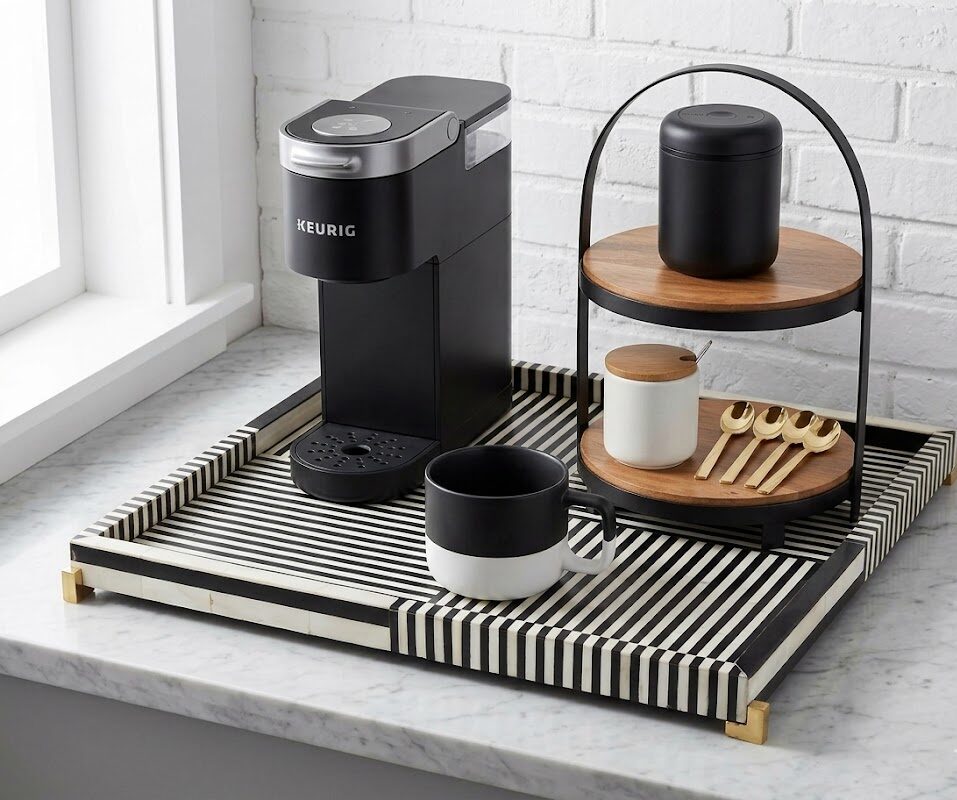
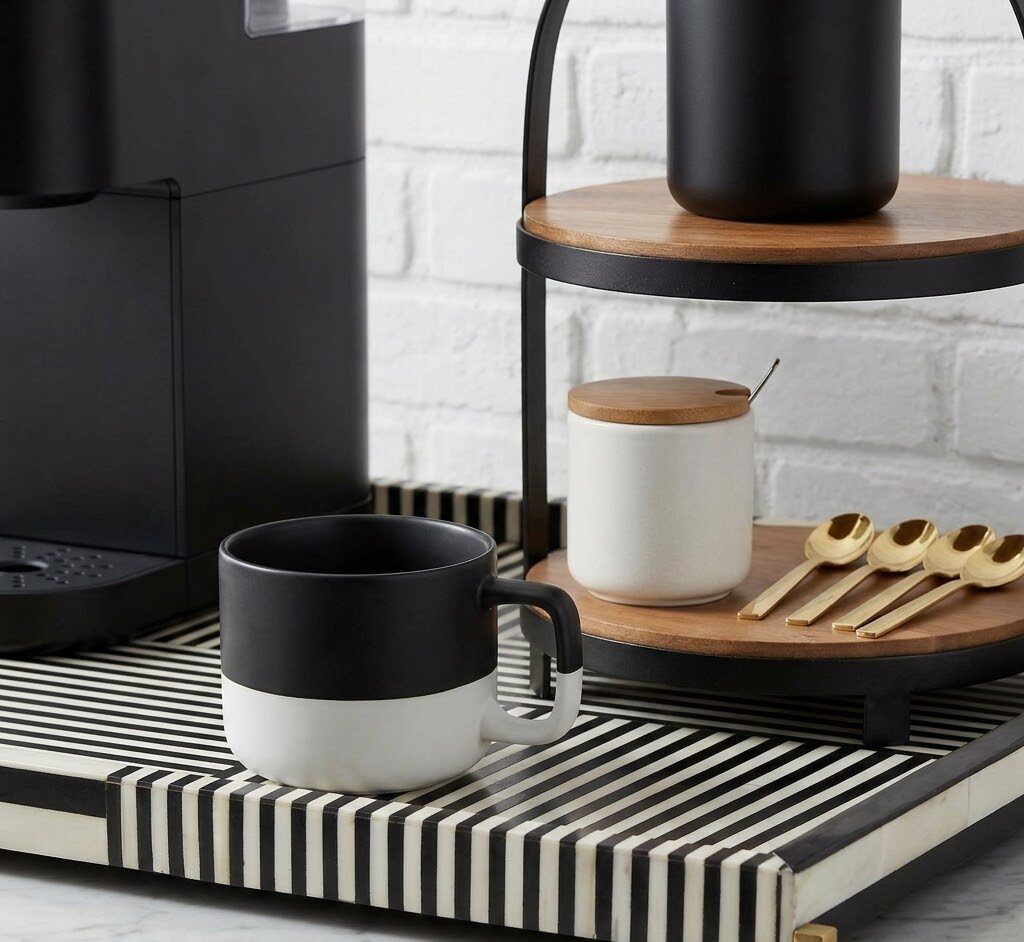
The tiered wood server in this setup doubles usable space without expanding the footprint. Bottom tier for sugar and cream. Top tier for coffee storage.
Layering creates depth. It also keeps smaller items from visually competing with the machine.
Tall in back. Medium in the middle. Low in front.
Simple structure. Instant polish.
3. Organized (Grouped by Function)
Coffee supplies migrate when they don’t have defined zones.
Sweeteners cluster together. Brewing tools stay near the machine. Loose spoons live in one contained area.
Defined grouping prevents daily reshuffling — and keeps the counter from slowly drifting back into chaos.
4. Within Reach (Workflow Matters)
A good countertop coffee station minimizes movement.
Everything sits within one arm’s sweep. No opening cabinets. No crossing the kitchen half-awake.
The tray enforces efficiency naturally. A contained footprint means maximum reach with minimal effort.
Position near an outlet. Leave space in front for mug placement. The routine should feel smooth, not cramped.
5. Styled (Cohesion Creates Calm)
Styling is not about excess. It’s about cohesion.
In this black-and-white coffee tray setup:
- The machine echoes the metal frame.
- Wood tiers warm the palette.
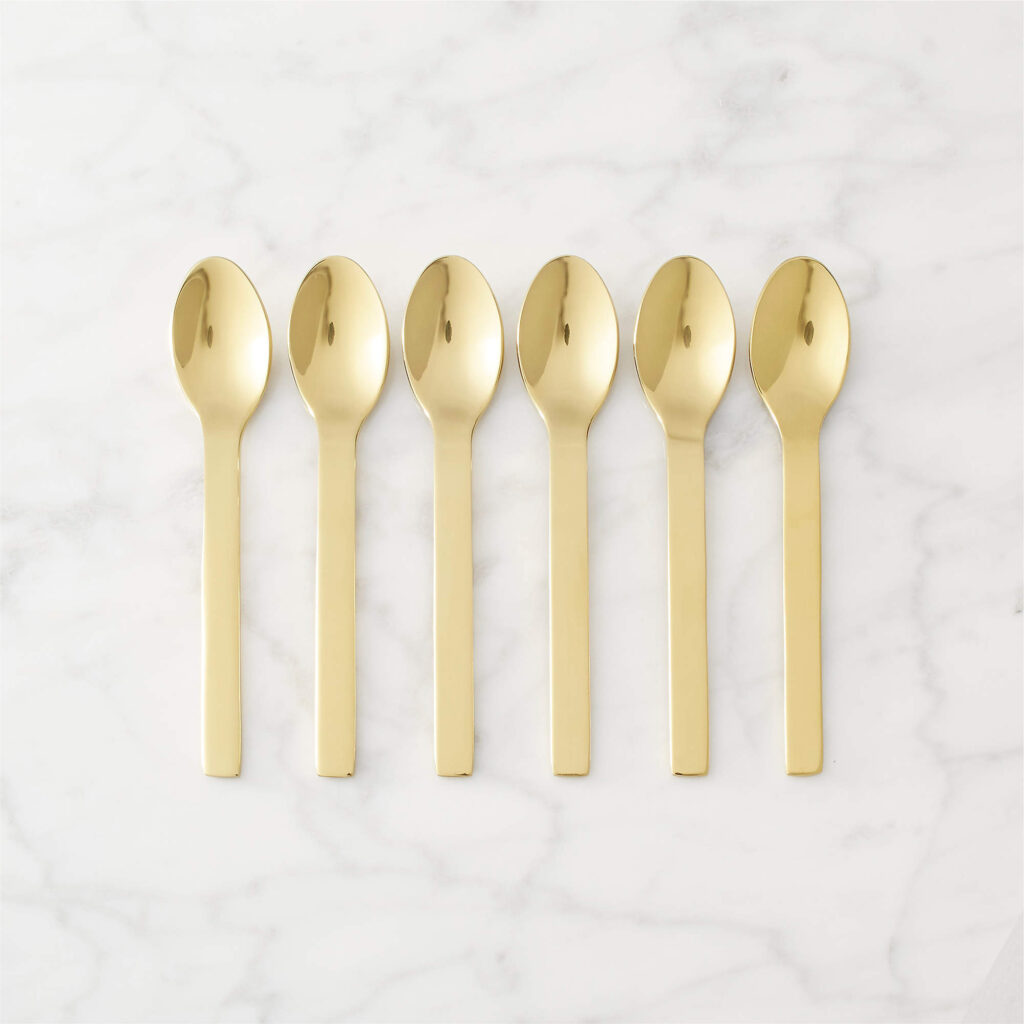
- Brass spoons add quiet contrast.
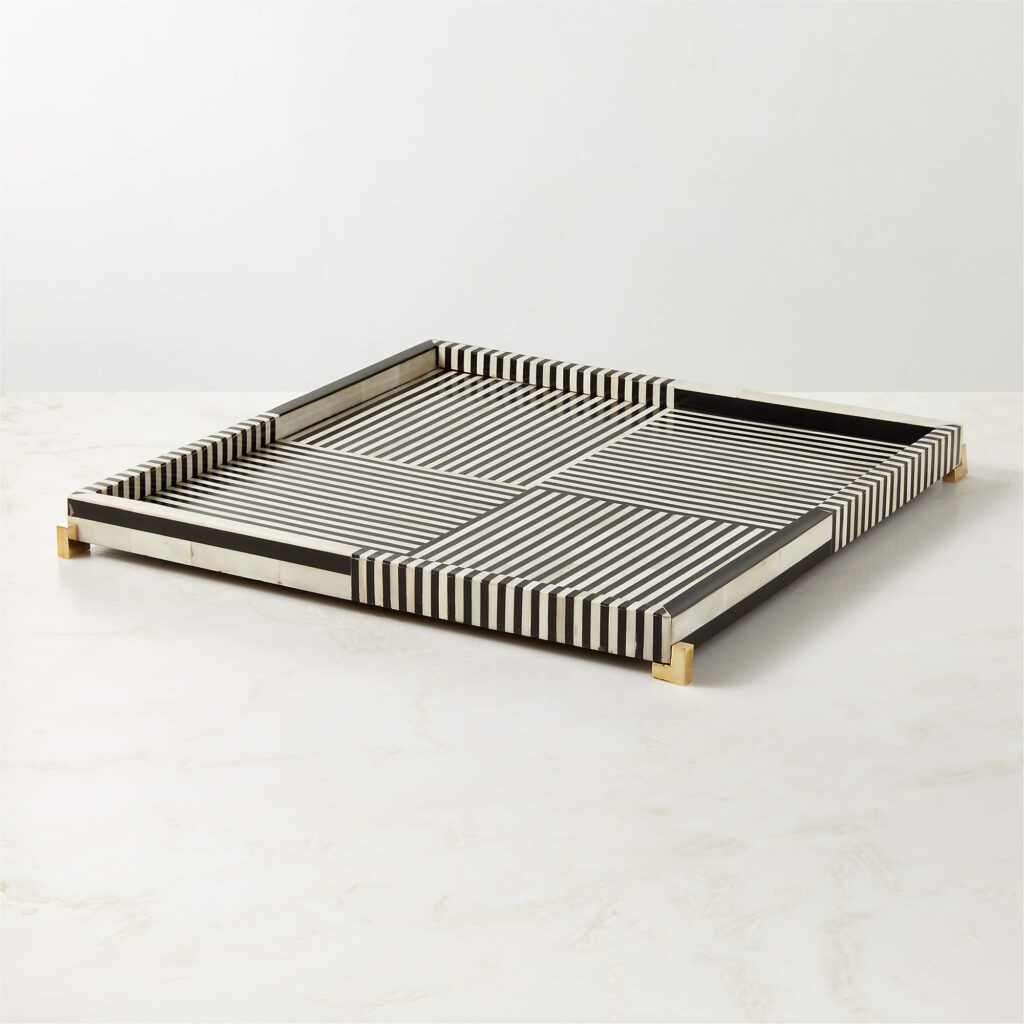
- The striped tray creates a defined visual base.
Even mixed brands look curated when confined within a boundary.
The tray does the heavy lifting.
Why Trays Beat Other Coffee Bar Solutions
Pinterest shows impressive coffee bars. Dedicated cabinets. Floating shelf arrays. Entire buffets converted to beverage stations.
Those solutions require space most kitchens lack. Apartment dwellers face eighteen inches of available counter. Maybe twenty-four.
Trays say you don’t need more space. You need better containment. That mindset shift empowers rather than frustrates.
Rental restrictions prevent shelf installation. Trays require no hardware. No landlord approval. No security deposit risk. Move the entire setup when leases end.
Cleaning becomes simpler. Loose items mean constant rearranging. Wipe around this. Move that. Replace everything.
Cleaning becomes simpler. Instead of moving seven items one by one, you lift once, wipe the counter, and set everything back down. The tray even protects marble or quartz from stray drips — a small detail that keeps light countertops from looking stained or neglected.
The reduction in tiny daily annoyances compounds quickly.
The Formula That Makes Styling Easy
Many people feel defeated by Pinterest perfection. Their setups never look like that.
Trays provide structure. The formula becomes visible. Tall elements in back. Medium height items mid-tray. Low profile pieces front.
This solves intimidation. The tray edges create natural boundaries. The layering principle provides clear guidance. Success becomes achievable rather than mysterious.
Mismatched items gain cohesion. Different brands. Various containers. Mixed heights. The tray unifies everything within defined space.
Budget accessories look curated. The visual containment tricks the eye. Expensive styling without replacement costs.
How Trays Train Household Habits
Shared kitchens breed coffee supply chaos. Pods migrate. Mugs disappear into bedrooms. Sweeteners drift to random cabinets.
Defined trays create visual rules. This is where coffee lives. The boundary communicates without nagging.
Family members return items to the tray automatically. The visual destination becomes obvious. Scattered supplies look wrong against the organized baseline.
This subtle training works better than verbal reminders. The system maintains itself once established.
Luxury in Eighteen Inches
Luxury isn’t about square footage. It’s about intentionality.
A tray transforms clutter into curated vignette. The ritual of selecting a mug from the tray feels boutique. Hotel-like. Considered.
Small kitchens achieve this energy without expansion. The moment matters more than the space. Trays create that moment in minimal footprint.
Morning coffee becomes something you approach rather than something you grab while distracted. The psychological shift elevates everyday routines.
The Coffee Bar That Fits Your Life
Pinterest loves elaborate coffee bars with floating shelves and built-in cabinetry.
Most kitchens don’t have that kind of space.
A tray-based coffee bar works in apartments or starter homes. In kitchens where eighteen inches of counter is a luxury.
It’s portable. It’s renter-friendly. It requires no tools, no hardware, and no permanent changes.
More importantly, it changes how the space feels.
The difference between grabbing coffee and approaching a coffee station is subtle — but powerful. One feels rushed. The other feels considered.
And that’s what a tray delivers: structure, containment, and a small daily ritual that feels intentional.
Luxury isn’t about square footage.
It’s about boundaries.